
Hair · Men
Beard dandruff and itch
Why the skin under a beard flakes and itches, and the simple medicated routine that settles it.

At a glance
- What it isBeard dandruff means flakes in the beard and itchy, sometimes greasy or scaly skin underneath
- CausesA yeast called Malassezia lives on everyone's skin and feeds on skin oil
- What helpsBrush or comb the beard gently each day before washing your face to lift flakes
- AvoidAvoid scratching and picking at flakes, plant oils such as olive oil (the yeast can feed on…
- On darker skinOn brown and black skin the flaky patches may look lighter or darker than the surrounding skin…
- See a doctor ifSee a doctor if flaking or itch has not improved after four weeks of weekly medicated shampoo
Key points
- Beard dandruff is usually seborrhoeic dermatitis, a common skin condition, not poor hygiene.
- A weekly anti-dandruff shampoo on the beard and the skin underneath usually controls it.
- It tends to come back, so keep a maintenance routine.
What it is
Beard dandruff means flakes in the beard and itchy, sometimes greasy or scaly skin underneath. In most men it is a mild form of seborrhoeic dermatitis, the same condition that causes dandruff on the scalp and flaking around the nose and eyebrows.
How it works
A yeast called Malassezia lives on everyone's skin and feeds on skin oil. In some people the skin reacts to it with inflammation, faster shedding and flakes. Beards trap oil and dead skin, which makes the problem more likely. It comes and goes, and is often worse in cold or dry weather, with stress and when you are run down.
Why it matters on darker skin
On brown and black skin the flaky patches may look lighter or darker than the surrounding skin rather than red, and they can leave pale or dark marks that take time to even out. Because the colour change can be mistaken for a fungal infection or eczema, it helps to know the typical pattern: flaking in the beard, eyebrows and around the nose, often with scalp dandruff too.
Causes and triggers
An oily, untreated beard, washing too rarely, heavy oils and greases, stress, lack of sleep, cold or dry harmattan weather, and alcohol-based aftershaves on irritated skin.
What helps — and why it works
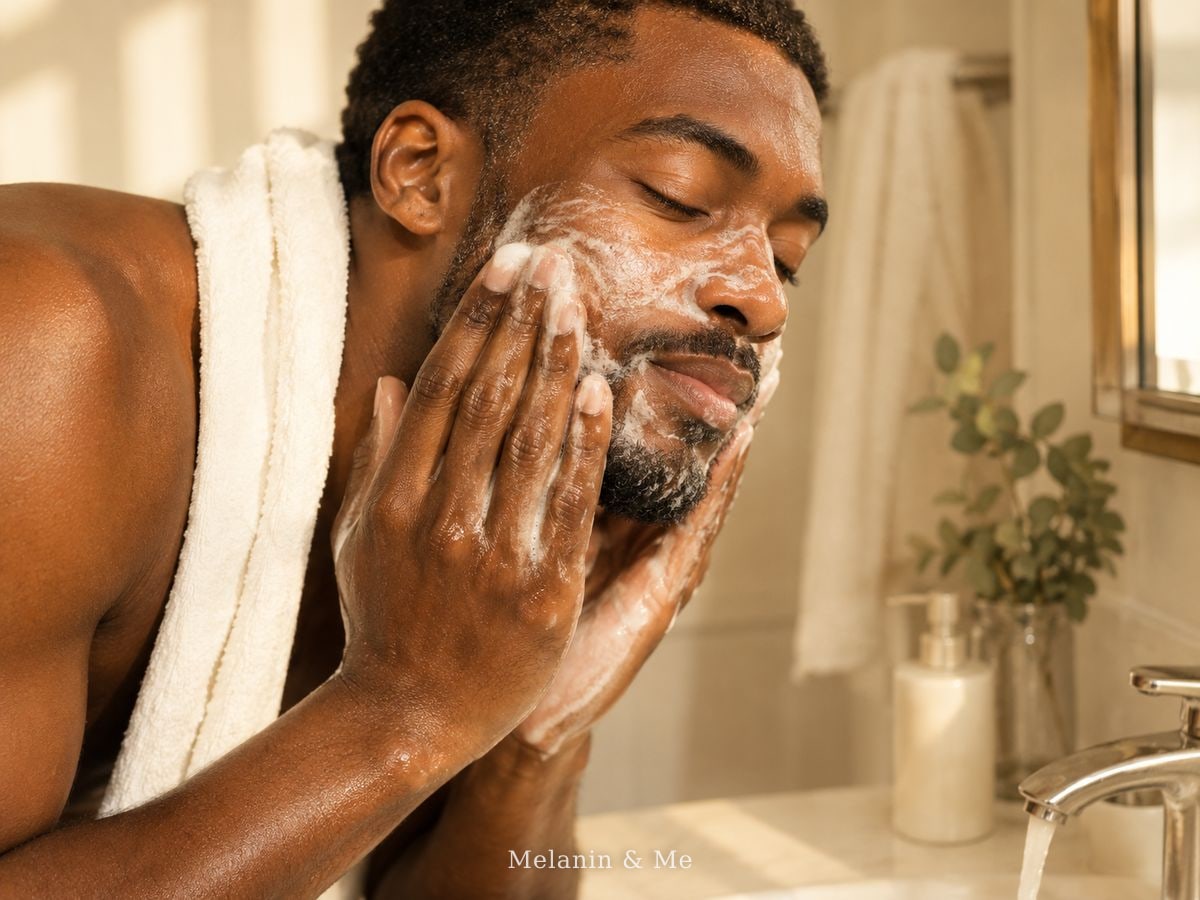
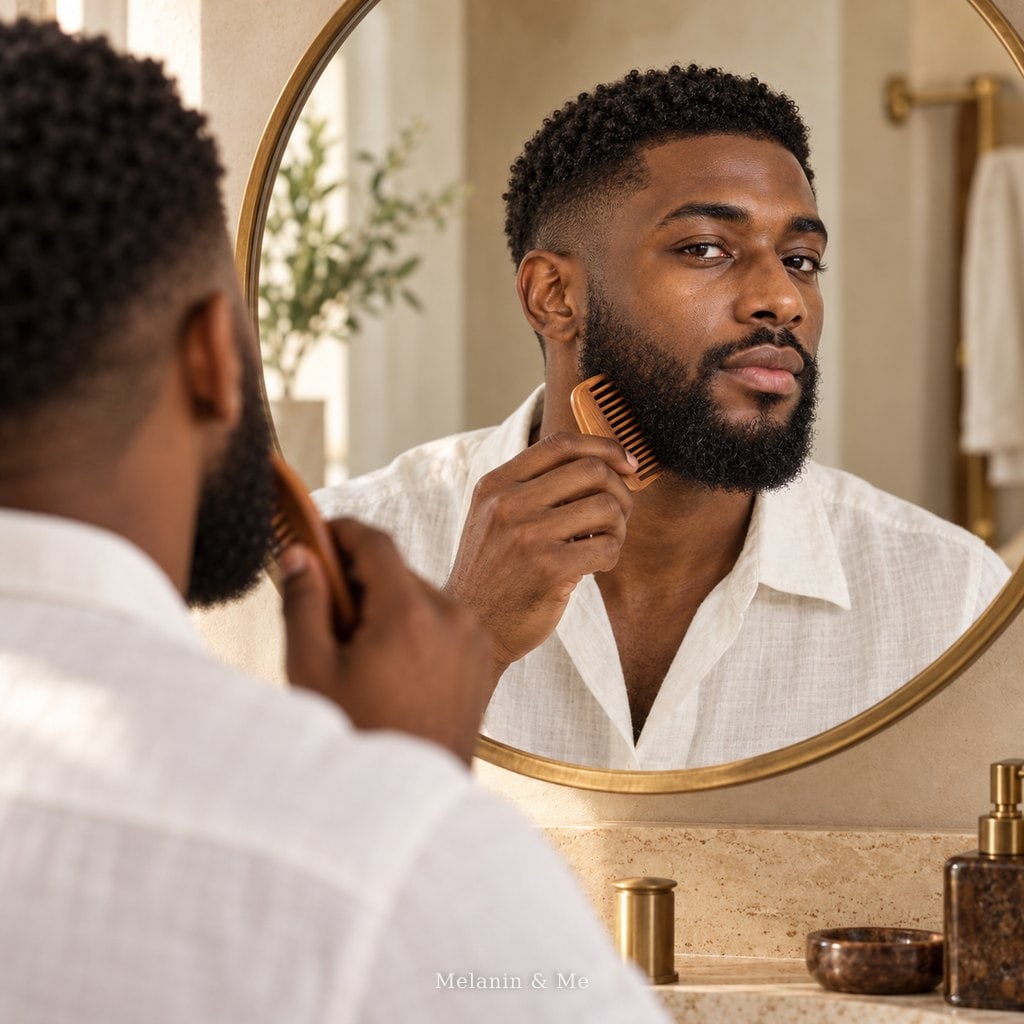
Brush or comb the beard gently each day before washing your face to lift flakes. At least once a week, wash the beard, the skin under it and your scalp with an anti-dandruff shampoo containing zinc pyrithione, ketoconazole or selenium sulfide, and leave it on for a few minutes before rinsing so it can work on the yeast. On other days use a gentle, fragrance-free wash, then a light, fragrance-free moisturiser on the skin. If the skin is itchy and inflamed, a pharmacist may suggest a mild hydrocortisone for a short time. Shaving the beard off can also help, if you are happy to do that. Keep using the medicated shampoo once a week after it clears to stop it returning.
What to avoid and why
Avoid scratching and picking at flakes, plant oils such as olive oil (the yeast can feed on them) and heavy greases that trap flakes, alcohol-based products on irritated skin, and long courses of steroid or "mixed" creams bought without advice, which can thin the skin and cause new problems.
Common mistakes
- Rinsing the medicated shampoo off straight away.
- Stopping treatment as soon as it improves.
- Adding more beard oil to "fix" the dryness.
- Using antifungal or steroid creams from the market without knowing what is in them.
Important
When to see a doctor
See a doctor if flaking or itch has not improved after four weeks of weekly medicated shampoo, if it spreads to the ears, chest or scalp with thick scale, if there are ring-shaped patches, pus, acne-like bumps, pain, broken skin or hair falling out in patches, or if it keeps returning and affects your confidence or sleep. See a doctor too if it appears suddenly and is severe or widespread: this is sometimes a sign of a condition that weakens the immune system, which a doctor can check for.
Visit a hospital or clinic near you and ask to see a dermatologist (skin specialist), or ask your general doctor for a referral. Take this page and the products you use with you. Emergency: call 112112999911911.
Questions to ask your doctor or pharmacist
Useful questions include: What do you think is causing this? Is it likely to come back, and how can I prevent it? Which products should I stop? How long before I should expect improvement, and when should I come back if it isn't better? Are there side effects to watch for? Is this treatment safe if I am pregnant, breastfeeding or for my child? Writing your questions down, bringing your products (or photos of their labels) and taking dated photos of the problem make an appointment much more useful.
Next steps






Sources
- American Academy of Dermatology: DIY treatment for 5 common beard problems
- American Academy of Dermatology: Seborrheic dermatitis self-care
- DermNet: Seborrhoeic dermatitis
Evidence basis: Official guidance. Rests on guidance from national health services, regulators or specialist medical societies. How we judge evidence
What changed
- October 2026. New article, fact-checked against its sources.
How to read this article. This article explains general principles, based on guidance from organisations such as the NHS, NICE, the American Academy of Dermatology, DermNet and the WHO. It cannot account for your own medical history, medicines or pregnancy, and it is not a diagnosis. Where we mention treatments we do not give doses: a doctor or pharmacist will advise on what suits you. Timelines are typical, not guaranteed — everyone's skin, hair and nails respond at their own pace.
Source links checked 2026-10-21. Doctor review pending. Education only, not a diagnosis. Ask a doctor or pharmacist before starting treatment.