Makeup · 4 min read
Reading makeup labels: what "fragrance-free", "non-comedogenic" and "tested" really mean
Doctor review pending
A practical guide to the words on the tube, which ones help sensitive and darker skin, and which are marketing.
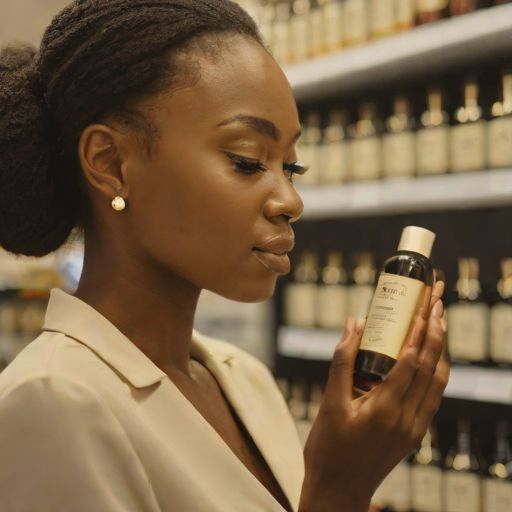
At a glance
- On darker skinMany reactions in darker skin show up as dark patches rather than redness
- Key pointFragrance-free is the most useful filter for sensitive skin
- Key pointHypoallergenic and non-comedogenic are not legally defined
- Key pointCheck the NAFDAC number and avoid lightening makeup
Key points
- Fragrance-free is the most useful filter for sensitive skin.
- Hypoallergenic and non-comedogenic are not legally defined.
- Check the NAFDAC number and avoid lightening makeup.
Why labels matter
Most reactions to makeup are not mysterious. Doctors who patch-test people with cosmetic rashes find the same few culprits again and again: fragrance, certain preservatives such as methylisothiazolinone (MI/MCI) and formaldehyde releasers, and a handful of pigments and resins. If you learn to read the ingredient list (the INCI list, written in a standard international format), you can avoid most of them before you spend money. The list is printed in descending order of amount down to 1%, after which ingredients can appear in any order. Colours are often listed at the end as CI numbers, for example CI 77491 for red iron oxide.
"Fragrance-free" versus "unscented"
Fragrance-free should mean no added fragrance or masking scent. Unscented can mean that a fragrance has been added to cover the smell of the base. Look for the words parfum, fragrance, aroma, or essential oils in the list. Also check for named fragrance allergens such as limonene, linalool, citronellol, geraniol and eugenol; in the EU they must be named when above a small threshold. For sensitive or eczema-prone skin, fragrance-free is the single most useful filter.
"Non-comedogenic" and "oil-free"
Non-comedogenic means the maker believes the product will not block pores, usually based on testing. It is not a regulated term and it is not a guarantee, but it is a reasonable signal for acne-prone skin. Oil-free is less helpful: some oils are fine, and some oil-free products contain heavy waxes. Judge by how your skin behaves over four to six weeks.
"Dermatologist-tested" and "ophthalmologist-tested"
These mean a doctor oversaw some testing, typically a patch test or use test on a small group. It does not mean the product is approved by doctors or will suit you. Ophthalmologist-tested is still worth choosing for mascara, eyeliner and eye cream if you wear contact lenses or have sensitive eyes. Hypoallergenic has no legal definition anywhere; treat it as a hint, not a promise.
Shades and darker skin
Many reactions in darker skin show up as dark patches rather than redness, and these marks (post-inflammatory hyperpigmentation) can last months. Choosing a low-irritant formula therefore matters more, not less. A wide shade range with distinct undertones is a sign the brand formulated for you rather than adding white pigment to a light shade, which often looks ashy.
Nigerian purchase checks
Buy from reputable shops, check the product has a NAFDAC registration number, and verify it on the NAFDAC website when unsure. Be cautious of very cheap versions of famous brands; counterfeit makeup has been found to contain bacteria and heavy metals. Never buy makeup that promises to lighten or "tone" the skin, which can hide mercury or steroids.
The INCI list, step by step
Start at the top: the first five ingredients usually make up most of the product. In a foundation that is typically water (aqua), a silicone such as dimethicone or cyclopentasiloxane, a humectant such as glycerin or butylene glycol, a film former and pigments. In a lipstick it is waxes and oils. Then scan for three things. First, fragrance words: parfum, fragrance, aroma, or a long list of botanical oils. Second, preservatives: phenoxyethanol, ethylhexylglycerin, sodium benzoate and potassium sorbate are common and rarely cause allergy; methylisothiazolinone and formaldehyde releasers such as DMDM hydantoin cause far more reactions. Third, the colour section, often after "may contain" or "+/-", which lists every shade's pigments in one block — so a list containing CI 75470 (carmine) may not mean your shade contains it.
Claims that sound medical
Words such as "clinically proven", "detox", "anti-pollution", "skin-perfecting" and "clean" are marketing. "Clean" has no agreed definition and often means only that the brand excludes a list of ingredients chosen for public fear rather than evidence; some "clean" products swap well-studied preservatives for essential oils that are more allergenic. "Natural" and "organic" also say nothing about irritation: poison ivy is natural. The useful question is not "is it natural?" but "does it contain the specific things that commonly irritate skin like mine?"
SPF on makeup
An SPF number on foundation or powder is tested at a thick, even layer of about 2 mg per square centimetre — far more than anyone wears as makeup. Treat SPF in makeup as a bonus, not your protection. A separate sunscreen applied first, then makeup, is what keeps dark marks and melasma from worsening in Nigerian sunlight.
Expiry symbols
The open-jar symbol with a number such as 6M or 12M means the product should be used within that many months after opening. Liquids and creams containing water spoil faster than powders. Mascara and liquid liner are the shortest at about three months. Heat in cars and on market stalls speeds up breakdown and can separate formulas, so store makeup out of the sun and away from steamy bathrooms.
A quick decision rule
If you have sensitive, eczema-prone or acne-prone skin, a good new makeup product usually has: no fragrance, a short and readable list, no MI/MCI, a NAFDAC number, a shade that matches without white cast, and a clear open-jar symbol. If any of these is missing, it is not necessarily unsafe, but patch-test it first and introduce only one new product at a time so that you know what caused any reaction.
Important
When to see a doctor
See a doctor or pharmacist if a problem is spreading, painful, bleeding, not improving after a few weeks of gentle care, or if you are unsure what it is. Visit a hospital or clinic and ask to see a dermatologist (skin specialist), or ask your general doctor for a referral. Take the products you use with you. Emergency: call 112.
Sources
Source links checked 2026-10-12. Doctor review pending. Education only, not a diagnosis. Ask a doctor or pharmacist before starting treatment.
Related articles
Makeup · 4 min read
Shade matching and undertones for deep skin
How to find a foundation that disappears into Nigerian skin tones without looking grey or orange.
Makeup · 4 min read
Foundation types, and why tinted (iron-oxide) sunscreen helps dark spots and melasma
Liquids, powders and sticks compared, plus the evidence for visible-light protection in darker skin.
Makeup · 4 min read
Mascara and eye makeup: the 3-month rule, infections and allergies
Simple habits that protect your eyes from infection, allergy and injury.

Makeup · 4 min read
Kohl, tiro and lead: what Nigerian families should know
Traditional eye cosmetics can contain lead. Here is how to enjoy the look safely.